How to Start Investing for Beginners

Some links in this article are affiliate links, meaning we may earn a commission at no extra cost to you.
Investing can feel confusing when you are first getting started. A lot of people assume they need a large amount of money, years of experience, or the perfect timing before they begin.
In reality, getting started is usually much simpler than it looks. Opening the right account, choosing a basic investment, and investing consistently over time is enough for most beginners.
The steps below walk through a simple way to start investing without making the process feel unnecessarily complicated.
Read Best Investment Apps to see our top picks.
How to Start Investing
Starting investing does not need to feel overwhelming. The goal is not to build a perfect portfolio right away — it is to start with a setup that feels simple enough to stick with consistently.
For most beginners, investing usually comes down to a few basic steps:
- Get your financial basics in place
- Open an investment account
- Start with one diversified investment
- Invest steadily over time
You do not need a large amount of money or years of investing experience to begin. In most cases, keeping things simple early on makes it much easier to stay consistent and avoid unnecessary mistakes.
Step 1: Get Your Financial Basics in Place
Before investing, it helps to have a basic financial foundation in place. Everything does not need to be perfect — you just want enough stability that you will not need to pull money back out right away when something unexpected happens.
A few important basics include:
- Having steady income coming in
- Understanding your monthly spending
- Setting aside a small emergency buffer
- Being careful with high-interest debt
Even a small emergency fund, such as $300–$1,000, can help take pressure off when surprise expenses come up.
Keeping emergency savings in the right bank account can also make managing cash flow easier while you start investing.
A simple way to think about it is this: if one unexpected bill would force you to immediately sell investments, it is usually a sign your financial foundation still needs a little work first.
That does not mean you need to delay investing for years. A lot of people get stuck waiting until everything feels completely “ready” before they begin.
If your monthly spending still feels difficult to manage, it can also help to start with a simple budget before focusing heavily on investing.
The goal is simply to get your finances stable enough that investing can become something consistent instead of something that keeps getting interrupted.
Step 2: Choose the Right Investment Account
Once your financial basics are in place, the next step is opening an investment account. This is the account where your investments will actually live.
For most beginners, the main options are:
- A standard brokerage account
- A retirement account like a Roth IRA or traditional IRA
- A workplace retirement plan like a 401(k)
The account itself is just the container — it is not the investment. Early on, the main goal is choosing something simple that does not feel confusing to manage.
If you are unsure which account type makes the most sense for your situation, it helps to understand how to choose an investment account before getting started.
Brokerage Accounts vs Retirement Accounts
A standard brokerage account gives you more flexibility because you can add or withdraw money whenever you want. Retirement accounts usually come with tax advantages, but they also have rules around withdrawals and contribution limits.
For many beginners, a Roth IRA is a common starting point because qualified withdrawals in retirement are tax-free. A brokerage account can still make sense if you want easier access to your money before retirement age.
What to Look for in an Investment Platform
Most beginner-friendly platforms let you open an account fairly quickly, often without any minimum balance requirement.
When comparing platforms, it helps to look for:
- Low or no account fees
- Automatic investing options
- A clean, easy-to-use app
- Fractional share investing
- Simple account setup
If the platform feels overly technical or difficult to navigate, it usually becomes harder to stay confident and consistent early on.
The goal is not to find the perfect investing platform. You just want one that feels straightforward enough that getting started does not become intimidating.
Step 3: Start With One Simple Investment
Once your account is open, the next step is choosing what to actually invest in. This is where a lot of beginners start feeling overwhelmed, but keeping things simple usually works better early on.
For many beginners, a broad market index fund or ETF is one of the easiest ways to start investing.
These investments:
- Spread your money across many companies at once
- Lower the risk of relying on a single stock
- Require very little ongoing management
- Make diversification easier from the start
A lot of people assume they need several different investments right away. In reality, starting with one diversified investment is often enough to begin building a portfolio.
Most beginners are better off starting simple instead of trying to build a complex portfolio right away.
Why Index Funds Are Popular for Beginners
Index funds are built to follow a large part of the market instead of trying to pick winning stocks.
That means your money is invested across many companies at the same time instead of depending on one or two businesses performing well.
For beginners, this usually feels easier to manage because it removes a lot of the pressure to constantly research stocks or react to short-term market swings.
Index Funds vs Individual Stocks
Individual stocks can move up or down very quickly, which can make investing feel stressful when you are just getting started.
Index funds usually move more steadily because your money is spread across many companies instead of tied to one business.
That does not mean index funds never lose value, but diversification can help reduce some of the sharper swings individual stocks experience.
Why Diversification Matters
Diversification simply means spreading your money across different investments instead of putting everything into one place.
A diversified investment helps reduce the impact of one company or sector performing badly. That usually leads to a smoother investing experience overall.
For many beginners, keeping investments simple and diversified makes it easier to stay consistent instead of constantly questioning every decision.
Step 4: Decide How Much to Invest
One of the biggest reasons people put off investing is thinking they need a large amount of money to start.
In reality, starting with a smaller amount that comfortably fits your budget is usually a better approach than waiting until you feel completely ready.
For many beginners, that may mean starting with:
- $25–$100 per month
- One contribution per payday
- An amount that does not put pressure on your monthly finances
Investing consistently matters a lot more than starting with a large amount right away.
Smaller contributions made regularly are usually easier to maintain than trying to invest bigger amounts once in a while. Over time, that consistency is what helps investing become part of your routine instead of something that keeps getting delayed.
Starting smaller can also make investing feel less stressful. When the amounts feel manageable, market ups and downs are usually easier to handle emotionally.
You can always increase contributions later as your income, savings, or confidence grows.
Step 5: Automate Your Investing
Once you decide how much to invest, the next step is making the process automatic. This is one of the easiest ways to stay consistent long term.
Many people set up recurring contributions so money moves into investments automatically on a schedule, such as:
- Every payday
- Every two weeks
- Once per month
Automation removes the need to constantly decide when to invest or whether to skip a contribution.
When investing depends on motivation or remembering to do it manually, it becomes much easier to put off. Automatic contributions help investing become part of your normal routine instead of something you have to keep thinking about.
You do not need to automate a large amount right away. Even a small recurring investment is enough to start building consistency.
As your income or comfort level changes, you can always increase the amount later.
Step 6: Stay Consistent Through Market Ups and Downs
Once you start investing, the hardest part usually is not opening the account or picking investments — it is staying consistent when the market starts moving around.
Market drops are a normal part of investing. Even government investing resources like Investor.gov explain that short-term market volatility is expected over time.
Prices go up and down over time, and short-term declines happen even during strong long-term markets.
A few important things to keep in mind:
- Short-term losses are normal
- Investments do not move upward constantly
- Market swings happen regularly
- Long-term consistency matters more than short-term timing
For beginners, it is very common to feel nervous when investments drop shortly after getting started. Watching your balance go down for the first time can feel uncomfortable, even when the drop is completely normal.
Short-term market drops feel much bigger emotionally when you are new to investing, which is why reacting too quickly often causes problems.
A lot of investing mistakes happen when people start reacting emotionally to short-term market movement instead of sticking with their original plan.
The goal is not to predict every market move correctly. It is to stay invested long enough for time and consistency to actually matter.
Common Beginner Investing Mistakes to Avoid
Most beginner investing mistakes happen when people try to move too fast, overthink everything, or react emotionally when the market changes.
Waiting Too Long to Start
A lot of people delay investing because they feel like they need more money, more knowledge, or better timing before they begin.
In reality, getting started with a small amount and learning over time is usually more helpful than waiting for everything to feel perfect first.
Trying to Pick Winning Stocks
Many beginners immediately start searching for the “next big stock” instead of building a simple, diversified portfolio.
That usually adds more stress and risk early on without helping much in the long run.
Watching Investments Too Often
Checking investments constantly can make normal market movement feel much more dramatic than it actually is.
Daily market swings are normal, but watching them too closely often leads to emotional decisions that hurt long-term progress.
Reacting to Market Drops
Market declines are part of investing, but many beginners panic when prices fall and start changing their plan too quickly.
A lot of investing mistakes happen during short-term market drops because emotions take over and long-term thinking disappears.
Making Investing Too Complicated
A lot of people assume investing needs to be highly detailed or technical to work well.
In reality, a simple setup with steady contributions usually works better than constantly adding new strategies, accounts, or investments.
Keeping things simple early on makes it much easier to stay consistent long term.
Example of How Consistent Investing Can Grow Over Time
One of the simplest ways to understand investing is to look at what happens when money is invested steadily over long periods of time.
Here is a basic example:
| Monthly Investment | Time Period | Total Contributions |
|---|---|---|
| $50/month | 10 years | $6,000 |
| $100/month | 10 years | $12,000 |
| $200/month | 10 years | $24,000 |
At first, investing can feel slow because the balances do not move very much early on.
As time passes, those regular contributions start building on each other, and investment growth has more time to compound. That is why consistency usually matters more than trying to invest a large amount right away.
The goal is not to focus on short-term returns or perfectly timing the market. It is to build the habit of investing regularly and give your money time to grow over the long run.
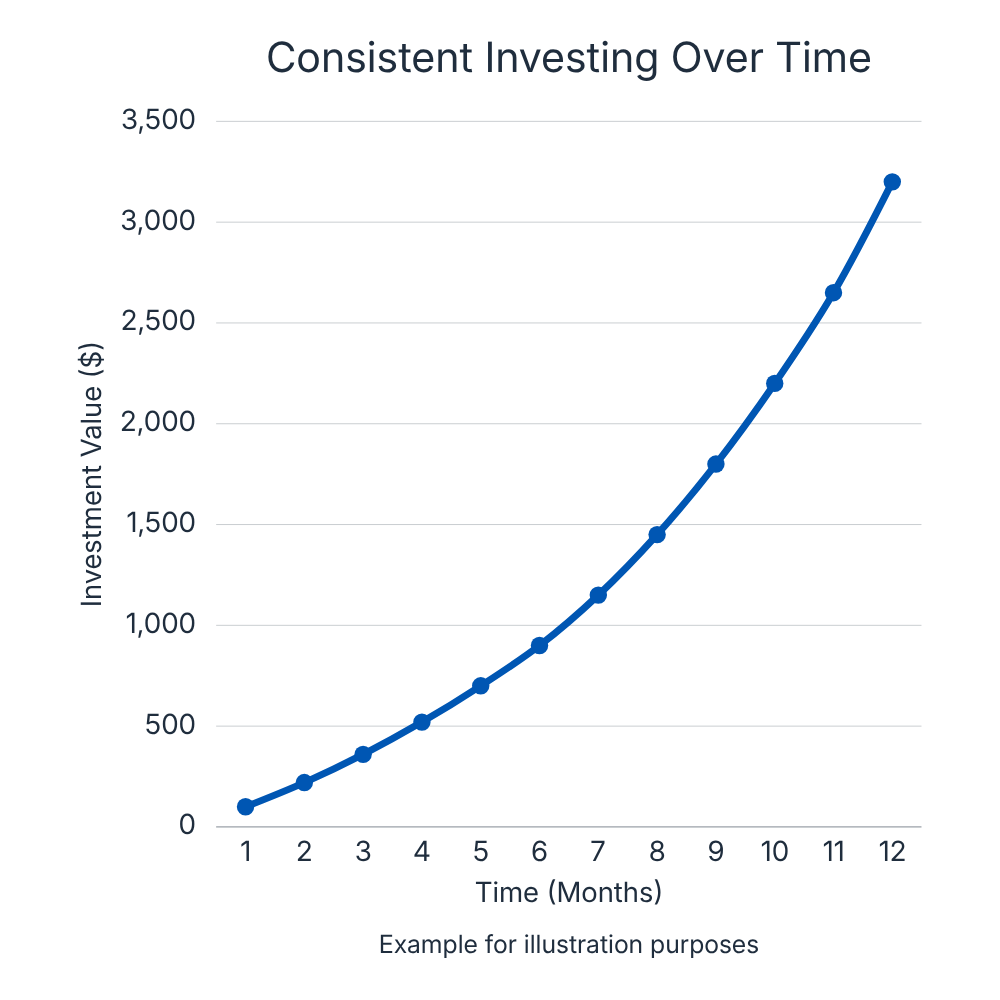
Consistent investing builds gradually over time.
How to Start Investing FAQ
How much money do I need to start investing?
Many investment platforms allow you to start with small amounts, sometimes as little as $1–$10 using fractional shares. For most beginners, starting with an amount that feels manageable is usually more important than waiting until you have a large amount saved.
What should beginners invest in first?
For many beginners, a broad market index fund or ETF is one of the simplest starting points because it spreads your investment across many companies at once.
This keeps investing more diversified and removes some of the pressure of trying to pick individual winning stocks early on.
Can you lose money when you start investing?
Yes, investments can go down in value, especially over shorter periods of time. Market ups and downs are a normal part of investing, which is why investing usually works best with a longer-term mindset.
Should I invest before paying off debt?
That depends on the type of debt. High-interest debt often costs more over time than investments are likely to earn, so many people focus on paying that down first while still building basic savings.
Is now a good time to start investing?
Trying to wait for the “perfect” time to invest often leads to staying on the sidelines too long.
For many beginners, starting with a manageable amount and investing consistently matters more than trying to predict exactly what the market will do next.
How to Start Investing for the Long Term
Read Best Investment Apps to see our top picks.
Starting investing does not need to be complicated or require a large amount of money. For most beginners, keeping things simple early on usually makes it easier to stay consistent over time.
The goal is not to build a perfect portfolio right away. It is to start with a basic setup, invest regularly, and avoid making emotional decisions based on short-term market movement.
For many people, long-term investing works better when the plan stays simple and manageable. A strategy that feels realistic to follow year after year is usually more valuable than constantly trying to optimize every detail from the beginning.